

Rising electricity bills and the gradual shift away from gas are pushing more Australian households to rethink how they heat water. Hot water alone can account for a significant portion of home energy use, which is why efficient alternatives like heat pumps are gaining attention.
The good news is that switching doesn’t have to be expensive upfront. The heat pump STC incentive helps reduce the cost immediately, making energy-efficient upgrades more accessible. In this guide, you’ll understand how the incentive works, how much you can realistically save, and what steps you need to take.
Who This Guide is for?This guide is designed for Australian homeowners who want to reduce energy costs and are considering upgrading their hot water system to a more efficient solution:
- Households dealing with rising electricity or gas bills
- Homeowners planning to replace old or inefficient hot water systems
- People exploring heat pump hot water systems but unsure about costs and incentives
- Solar system owners looking to maximise energy savings with efficient appliances
- Property owners wanting to reduce reliance on gas and move toward electrification
- Anyone looking for a practical, cost-effective way to improve home energy efficiency
What Is the STC Scheme?
The STC (Small-scale Technology Certificates) scheme is a government-backed program designed to encourage households to adopt renewable energy systems.
Instead of giving you money later, it works as an upfront discount when you install an eligible system. When you install a heat pump, your system generates certificates based on expected energy savings. These certificates are then traded and applied as a discount.
In simple terms:
- The government rewards energy-efficient upgrades
- The installer handles the paperwork
- You pay less at the time of installation
This is why the heat pump STC incentive is often seen as one of the easiest incentives to access in Australia.
How STC Incentives Work for Heat Pump Hot Water Systems
The process is straightforward but often misunderstood.
When you install an air source heat pump, the system qualifies for STCs based on how much energy it is expected to save compared to traditional systems. The more efficient the system, the higher the number of certificates.
Here’s how it typically works:
- The incentive is applied as an instant discount, not a cashback
- Your installer calculates and assigns the STCs
- Only approved products under the scheme qualify
This means you don’t need to navigate complex government applications yourself. Most of the work is handled before you even receive the final invoice.
Because of this, the heat pump STC incentive feels less like a grant and more like a built-in price reduction.
How Much Can You Save with STC Incentives?
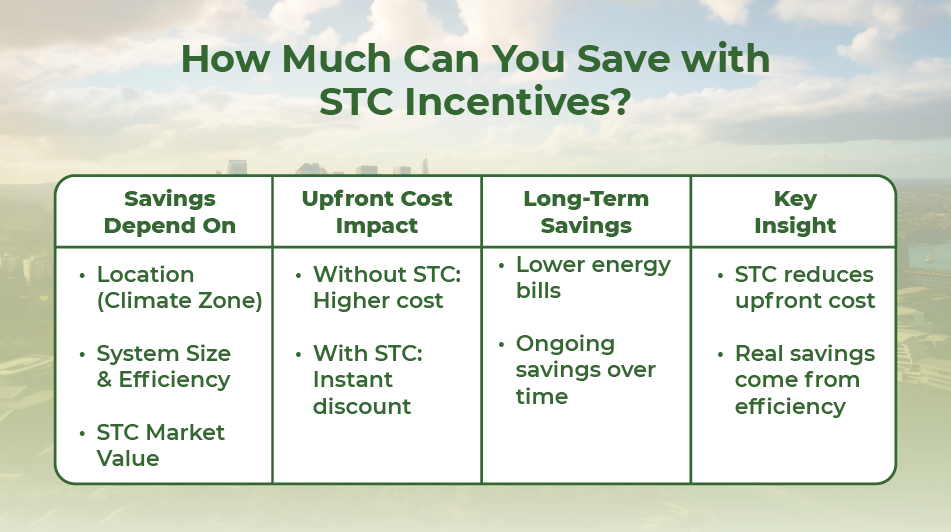
This is the question most homeowners care about, and the honest answer is: it depends.
Savings vary based on:
- Your location (climate zone affects STC value)
- The size and efficiency of the system
- Market value of STCs at the time
That said, most households can expect a meaningful reduction in upfront cost, often making a heat pump competitive with or even cheaper than traditional systems.
For example:
- Without incentives, a system may seem like a premium option
- With the heat pump STC refunds, the upfront cost drops significantly
- Over time, lower energy use adds additional savings
The key takeaway is that incentives reduce the barrier to entry, but the real value comes from ongoing efficiency.
Who Is Eligible for STC Incentives in Australia?
Eligibility is broader than most people assume.
You may qualify if:
- You are installing a system in a residential property
- The system is listed as an approved product
- Installation is completed by a qualified professional
The incentive applies to:
- Existing homes replacing old systems
- New builds installing energy-efficient solutions
While the STC scheme is national, some states offer additional heat pump incentives, which can further improve affordability.
How to Claim STC Incentives (Step-by-Step)
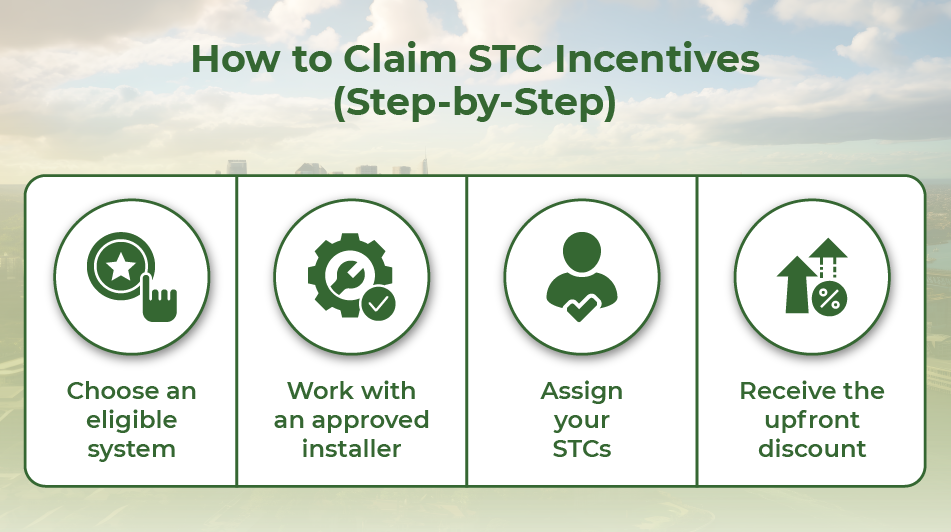
You don’t need to deal with complicated forms. Here’s how it works in practice:
1. Choose an eligible system
Make sure the unit is approved under the STC scheme
2. Work with an approved installer
They handle compliance and paperwork
3. Assign your STCs
You sign a form allowing the installer to claim them
4. Receive the upfront discount
The incentive is deducted from your installation cost
This process is why the hot water heat pump incentive is considered one of the most accessible incentives available.
Common Mistakes to Avoid
Many homeowners miss out on full benefits because of avoidable mistakes.
- Choosing a system that is not STC-approved
- Working with installers unfamiliar with incentive processes
- Assuming all residential heat pump systems qualify
- Focusing only on upfront price instead of long-term efficiency
A poorly chosen system can reduce both incentive value and performance.
Heat Pump vs Gas Hot Water: How Incentives Change the Cost
Gas systems have traditionally been cheaper upfront, but that gap is shrinking.
With the heat pump STC incentive, the comparison changes:
- Heat pumps become more competitive in upfront cost
- Running costs are typically lower than gas
- Emissions are significantly reduced
When you factor in incentives and long-term savings, heat pumps often come out ahead in a heat pump vs gas hot water comparison, especially for households planning to stay in their home for several years.
Is a Heat Pump Worth It After STC Incentives?
For most Australian households, the answer is yes, but not for the reasons people assume.
The incentive makes the system affordable, but the real value comes from:
- Lower energy consumption
- Reduced reliance on gas
- Compatibility with solar systems
A well-installed system continues delivering savings long after the initial incentive is applied.
This is why the heat pump STC incentive should be seen as a starting benefit, not the main reason to upgrade.

Conclusion
The heat pump STC allowance is one of the simplest ways to reduce the upfront cost of switching to an energy-efficient hot water system in Australia. It turns what might feel like a premium upgrade into a practical, achievable decision.
When combined with lower running costs and potential additional heat pump incentives, the overall value becomes clear.
If you’re considering an upgrade, focus on choosing the right system and installer. The savings will follow naturally.
FAQs
The scheme is ongoing but designed to gradually reduce over time, so earlier adoption can mean better value.
Technically yes, but most homeowners assign them to installers in exchange for an upfront discount.
STCs are national, but additional state-level incentives may apply.
No. Only approved systems under the scheme qualify, so always confirm before purchasing.